






Profile view of a bearded man wearing a dark baseball cap and a dark gray T-shirt against a plain off-white background.

How long a furnace lasts in Delaware

Step 1 of 3: Equipment

How long does a furnace last in Delaware?

You want to know if your furnace is nearing the end of the road, or if a strange noise this winter means trouble ahead. Most homes in Delaware heat with gas, and that furnace is one of the bigger investments in the house. Knowing roughly how long it should hold up helps you tell normal wear from a sign that replacement is coming.

A gas furnace in Delaware typically lasts 15 to 20 years

That range holds for most gas furnaces no matter where they're installed, since the heat exchanger and burners wear at a similar pace in any home. What changes things here is how hard the furnace works each winter and how often it gets serviced. A furnace that's run and maintained well can reach the far end of that range, while one that's skipped a few tune-ups may start failing sooner. With power costing more in Delaware, an aging furnace that's losing efficiency also shows up as a higher bill before it quits outright, which is often the first real clue that it's getting old.

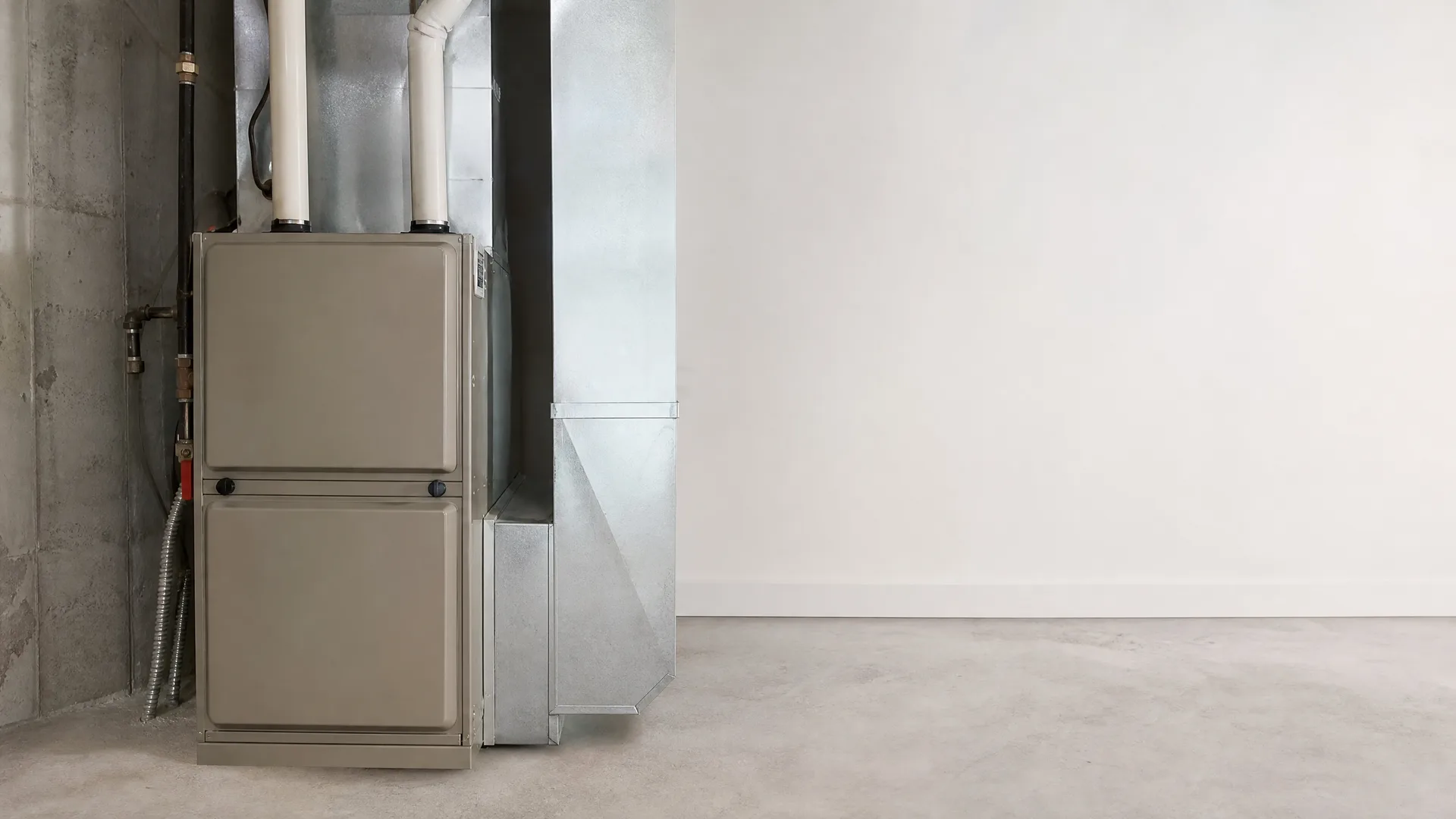
A beige high-efficiency furnace with two white PVC pipes stands beside sheet-metal ductwork and a concrete wall in an empty basement with a bare light-colored wall and concrete floor.

Why gas furnaces wear out

Every time the burners fire, the heat exchanger expands, then contracts again as it cools. That metal fatigue adds up over thousands of cycles. Eventually cracks form, the igniter struggles to keep up, or the blower motor starts drawing more than it should. None of this happens on a schedule. A furnace run hard through a cold stretch ages faster than one that gets regular attention, which is why two units installed the same year can fail years apart.

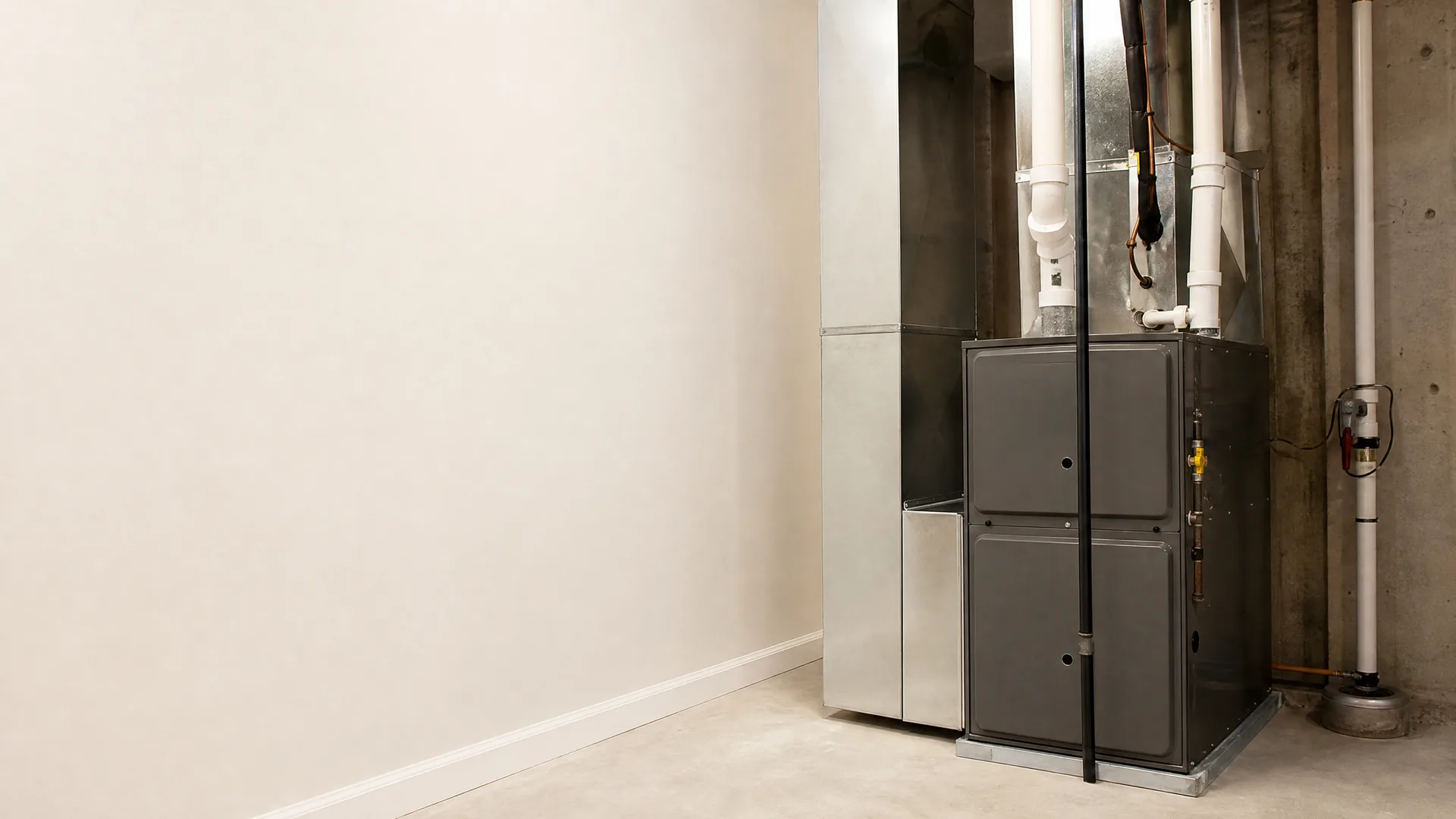
A gray furnace with sheet-metal ductwork and white PVC vent pipes stands in the corner of a finished basement room with a blank beige wall and concrete floor.

What a dying furnace costs you

An aging furnace does not just risk quitting on a cold night. It loses efficiency as the heat exchanger and burners wear, so it burns more gas to put out the same heat. With power rates high in Delaware, a furnace limping along instead of running clean can show up on the bill well before it finally fails. Replacing it before that point is often less about the furnace than about what it is costing you every month it keeps running.

Is your furnace trying to tell you something?

A furnace getting old doesn't quit all at once. It gets louder first, a bang when the burners light or a rattle from the blower that wasn't there last winter. It runs longer to hold the same temperature, and you feel it in rooms that used to warm up fast but now lag behind. The air coming out of the vents feels cooler than it should. You might smell something faint and metallic when it kicks on. Some rooms end up colder than others no matter where the thermostat is set. None of that means it's finished, but it does mean the heat exchanger or the blower is working harder than it used to, and with power costing what it does here, that shows up on the bill before it shows up as a breakdown.

  1. Thermostat calls for heat and sends power to the control board.

  2. Inducer motor spins up to clear the heat exchanger before ignition.

  3. Igniter glows, then the gas valve opens to feed the burners.

  4. Burners light and heat begins to build inside the heat exchanger.

An older man with gray hair and a beard, wearing a dark coat dusted with snow, stands smiling in a doorway of a warmly lit home with a sofa, lamp and window visible behind him.
An older man with grey hair and a beard, wearing a dark coat dusted with snow, stands in a dimly lit entryway with a ceiling lamp, a side table with two shaded lamps, and a lit fireplace visible in a room beyond.
A bearded older man in a dark snow-dusted coat and scarf stands just inside a home's front door, with a lamp-lit room and snowy window visible behind him.
An older man with gray hair and a beard stands in a doorway of a home, wearing a dark coat dusted with snow, with a lit fireplace and lamp visible in the blurred room behind him.

A furnace around 15 years old that still lights on the first try and holds a steady temperature can keep going another winter. The cost of running it is a separate question from whether it still works.

A furnace that short cycles, trips its limit switch, or needs a new igniter two winters running is telling you the repairs will keep coming. At that point a new install is the one with a known cost.

A woman wrapped in a cream textured blanket sits in an armchair beside a lit lamp and a dark window, with an open book in the foreground.
A bearded man in a plaid flannel shirt stands indoors looking out a frost-covered window, with a steaming dark blue mug on the wooden sill and snow-covered trees outside.

Get your furnace to the right pro

A furnace that's twenty years old and struggling is working against two things at once here: Delaware's electric rates and a winter that asks a lot of a tired heat exchanger. Replacing it now, before a cold snap turns a decision into an emergency, means you get to pick who does the work instead of taking whoever answers the phone first. A new furnace also runs the blower and inducer motor more efficiently, which matters when power costs what it does here. None of that changes if you wait, except the timing gets worse and the choice gets narrower. If the noise, the short cycling, or the age has you wondering, that's reason enough to get a read on it from someone who installs these for a living. Send the request and let a contractor sort out whether it's a repair or a replacement. That's one less thing sitting on your list this winter.

Keep feeding it another winter

A furnace that still lights without hesitation and heats the house evenly can be worth another season, even past 15 years. Repairs on an old unit are usually cheaper than a new system up front, and if the cracks and short cycling haven't started, there's no mechanical reason to rush. The tradeoff shows up on the electric bill instead of in the duct work. An aging furnace loses efficiency slowly, so it pulls more power to do the same job it did ten winters ago. In Delaware, where electric rates run high, that difference adds up over a full winter even though the furnace itself runs on gas for heat.


Replace it before it fails

Once a furnace starts short cycling, tripping its limit switch, or taking longer each week to catch, the next failure usually comes in the middle of a cold stretch, not on a mild afternoon. Waiting it out means living with the noise and the uneven heat while hoping the heat exchanger holds. Replacing it on your own schedule means picking the unit and the timing instead of taking whatever's available when the old one quits in January. A new furnace also runs on a tighter efficiency margin than one nearing 20 years old, which matters here given what Delaware pays for electricity to run the blower and controls.

An older metal furnace with PVC and metal pipes stands on a concrete basement floor beside galvanized ductwork, with wooden stairs and a water tank in the background.
Before you get your furnace installation
A gray high-efficiency furnace in a basement with sheet-metal ductwork, white PVC vent pipes, metal plumbing lines, a condensate pump on the floor, and a window showing green trees outside.
After you get your furnace installation

Before you get your furnace installation

You're watching for the signs, listening for the bang on startup, wondering if this is the winter it finally quits on a cold night.

Request a pro

After you get your furnace installation

A contractor has been in touch, and the decision about your furnace is off your plate. You're not the one tracking it anymore.

Request a pro

Winter nights average 28°F statewide

Overnight temperatures across Delaware average 28°F in December, January and February. That's below freezing most nights for three months straight, so your furnace is running long stretches to keep the house warm while you sleep.

NOAA nClimDiv 1991-2020 county normals weighted by homes

A furnace in Delaware runs 15 to 20 years, less if it's been struggling with short cycles and a tired heat exchanger, more if it still lights clean and holds heat evenly through those cold nights. The signs tell you which side of that range you're on. A bang at startup, a blower that runs longer than it used to, a gas bill that keeps climbing even though you haven't changed the thermostat. None of that is a guess once you've heard it or felt it. If what you're hearing says the furnace is done, there's no reason to sit with that through another winter of 28 degree nights. Send the form and the search for who fixes this stops being your problem to carry. A contractor gets matched to your furnace and your house, and reaches out. You go back to just living in the house, with the furnace question settled instead of hanging over you.

A wooden front door with six small glass panes and a narrow sidelight, set in a shingled house entry with white trim, reached by stone steps flanked by a planted urn with purple flowers and leafy branches in the foreground.
Exterior corner of a house with beige horizontal lap siding and a black-framed window, with white hydrangeas, ornamental grasses and low plantings along a flagstone patio.
Corner of a house with tan lap siding and a window, a brick step edge, flowering white hydrangeas and green shrubs beside a flagstone walkway leading to a white picket fence and a tree in backlit sunlight.
House exterior with cream horizontal lap siding, a dark-framed window, a black wall lantern beside a wood door, potted shrubs on stone steps, and white and pink hydrangeas in the foreground garden.
Corner of a cream lap-sided house with a white-framed window and dark shingled roof, beside a white-flowering hydrangea shrub, a clipped hedge, mulched bed and lawn.

Matched to your furnace job

After you send the request, you're done searching.

Hand it over

There's no charge for the request.




