
Signs your furnace won't last a Delaware winter

Step 1 of 3: Equipment

What are signs my furnace won't make it through winter?

Delaware winters run long enough that a furnace on its way out usually shows it before it quits outright. You're not looking to replace a system that still has life in it, but you also don't want to find out it's done on a night when the temperature drops and the people in your house are counting on it to work.

Short cycling, yellow flames and rising gas bills mean it's struggling

A furnace that's failing usually tells you before it stops. It turns on and off every few minutes instead of running a full cycle. The burner flame looks yellow or flickers instead of burning steady blue. Rooms that used to heat evenly now have cold spots, or the air coming out of the vents feels lukewarm. Your gas bill climbs even though you haven't changed the thermostat. You hear banging, rattling or a screech when it starts up. Any one of these can point to a part that's worn out rather than the whole system failing, but together, or happening more often, they mean the furnace is working harder to do less. Left alone through a Delaware winter, that usually ends with no heat on the coldest night of the year.

A dark high-efficiency furnace on a concrete pad in a basement, connected to galvanized ductwork, white PVC vent pipes, and copper and black gas piping, with concrete walls and wood framing nearby.

Running the way it should

A furnace like this fires up, heats the house, and shuts off without you giving it a second thought. The burner lights on the first try, the blower runs quiet, and the gas line and exhaust pipe stay sealed and dry. That's a furnace built for a Delaware winter.


A gas furnace with a louvered upper panel stands on a concrete pad in a basement, flanked by sheet-metal ductwork, white PVC and metal pipes, and insulated columns.

Showing its age

This one still runs, but not the same way. The flexible duct connection and older cabinet point to a unit that's past its prime, and if that condensate line has ever backed up or frozen, you've probably already seen the puddle on the floor. Ignoring it now costs you on a night in January.

A woman with long blonde hair in a light blue shirt leans back on a beige sofa with her eyes closed, in a softly lit living room with cushions and a blurred plant and shelf in the background.
A woman with long dark hair in a gray knit sweater sits on a gray sofa with a cushion, looking toward a window in a living room with framed pictures and a lamp in the background.
A woman with long dark hair in a light grey knit sweater sits on a sofa indoors, looking to her right, with a framed landscape picture, a potted plant and a curtained window behind her.
A woman with long dark hair leans back against a gray sofa with her eyes closed, in a living room with a curtained window, a potted plant, and a dark screen in the background.

Most of these problems trace back to combustion and airflow, the two things a furnace has to get right every time it fires. The heat exchanger separates the flame from the air circulating through your house, and once it cracks, that separation is gone. A flame sensor tells the furnace the burner is actually lit, so when it's coated with residue, the furnace reads it wrong and shuts the burner down, sometimes within minutes of starting. The limit switch does something similar on the heat side, cutting power if the furnace runs hotter than it should. Burner flames show you the air and gas mix in real time. Blue and steady means it's right. Yellow or flickering means it isn't, and that same bad mix is what leaves soot behind on the exhaust pipe. The igniter has one job, lighting the gas on demand, and like any part that heats up and cools down every cycle, it eventually stops doing that job reliably.

What's actually happening inside

  • A cracked heat exchanger can let carbon monoxide mix into the air your blower pushes through the house.
  • A furnace that short cycles, turning on and off every few minutes, is often struggling with a dirty flame sensor or a failing limit switch.
  • Yellow or flickering burner flames instead of a steady blue usually mean the burner isn't getting the right mix of air and gas.
  • A blower motor that keeps tripping its own safety switch is pulling more current than it should and is close to failing outright.
  • Soot around the exhaust pipe or a persistent burning smell points to incomplete combustion that a tune-up alone won't fix.
  • A furnace that takes several tries to ignite is usually down to a worn igniter or a cracked flame sensor, parts that fail on their own schedule and only get worse.
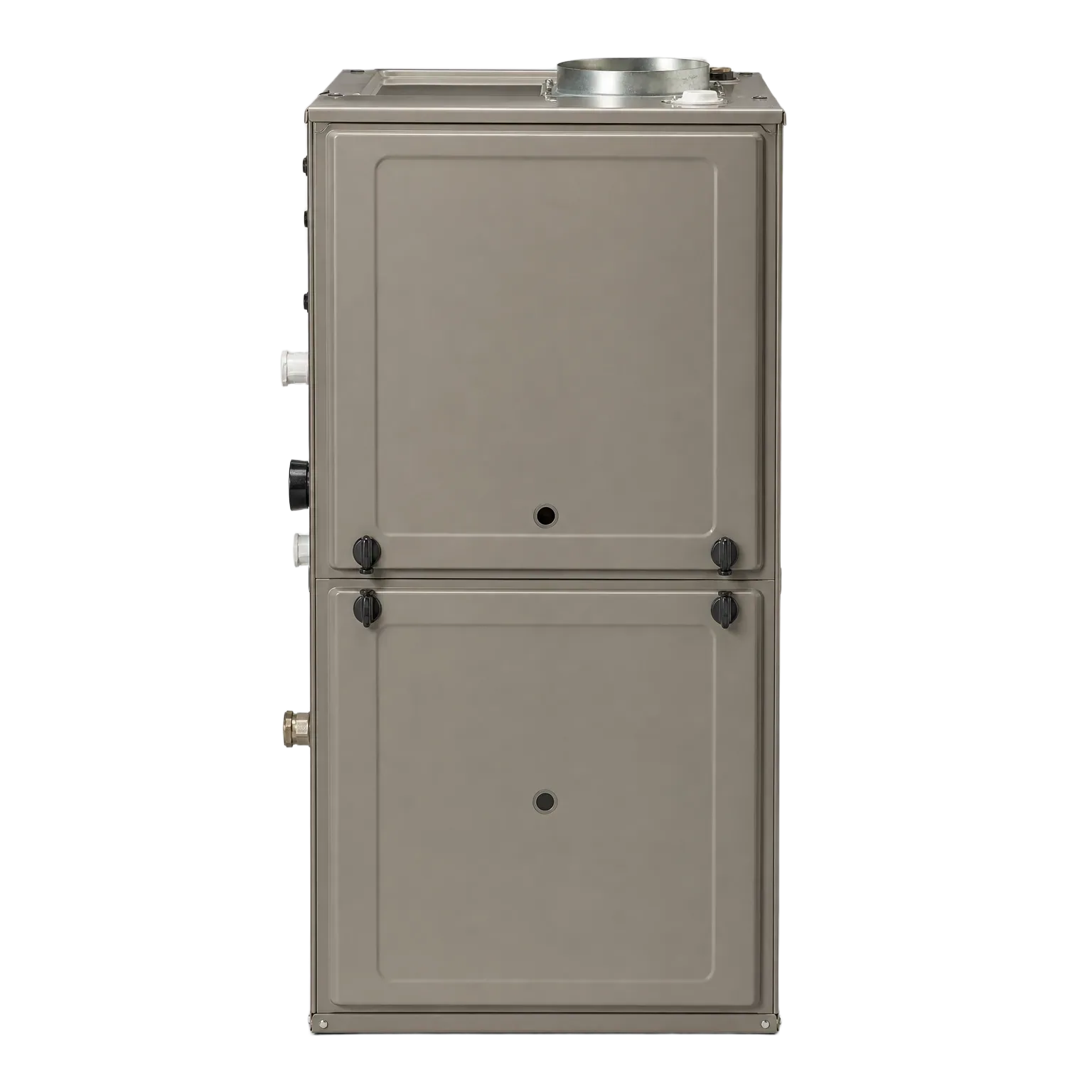
A beige high-efficiency furnace with white PVC vent pipes stands beside galvanized sheet-metal ductwork in a basement with a concrete floor, exposed wood studs, and metal piping along the wall.
A high-efficiency furnace like this should run its cycle and go quiet, no odd noise, no burner trouble, no stains on the pipes.
An older beige furnace with a louvered vent panel stands on a concrete basement floor beside galvanized sheet-metal ductwork, a metal flue pipe and vertical pipes along a concrete wall.
An older furnace with a flex flue and a worn cabinet is the one more likely to leave you without heat on a January night.

A furnace that's failing doesn't wait for a convenient night to do it. It usually gives out during the stretch in January or February when it's running almost nonstop, and that's exactly when a contractor's phone lines are busiest and a repair takes longer to schedule. If yours is short cycling, taking a few tries to light, or leaving a room colder than the rest of the house, that's the system telling you something now while you still have the choice of a repair instead of a houseful of cold air and a space heater running up a bill that's already high enough in Delaware. A cracked heat exchanger is the one that matters most. It won't announce itself with a louder noise or a bigger gas bill. You might just notice a faint odd smell, or notice nothing at all until a carbon monoxide detector goes off. That's not a reason to panic every time the furnace clicks on, but it's the reason to get a system showing other signs of wear looked at before the cold settles in for good.

A gray furnace cabinet in a basement, connected to galvanized sheet-metal ductwork and white PVC pipes, against a concrete wall with exposed metal piping and insulation overhead.
Before you get your furnace repair
A gray high-efficiency furnace with two PVC vent pipes stands in an unfinished basement beside sheet-metal ductwork, a framed and plastic-covered wall, and a bare concrete wall with vertical pipes.
After you get your furnace repair

A pro who works on furnaces

Your request goes to one pro, not a list of companies.

It costs nothing to send, and you don't have to hire anyone.

How Your Furnace Actually Fires

  • A furnace burns gas to heat a metal heat exchanger, then the blower pushes house air across it and into your ducts.
  • The igniter has to glow hot enough to light the burners within a few seconds, or the control board locks the furnace out.
  • A draft inducer motor has to spin up and prove good airflow before the igniter even gets power to fire.
  • Gas furnaces are built to ramp up heat output in stages, so a unit stuck on low during a cold snap may have a failing control board.
  • The flame sensor reads the burner flame through a tiny electrical current, and a buildup of soot on it can shut the burner down seconds after it lights.
  • Heat exchangers are metal, and metal that heats and cools every cycle for years eventually develops hairline cracks along the seams.

A furnace isn't just a box that makes heat. It runs through a sequence every time it starts, and each step has to pass before the next one happens. The draft inducer motor spins up first, clearing the exhaust path, and a pressure switch has to confirm there's good airflow before anything else gets power. Only then does the igniter get its signal, and it has to climb to temperature fast, within a few seconds, or the control board decides something's wrong and locks the whole thing out. Once the burners light, the flame sensor takes over. It's a thin metal rod that reads the flame through a small electrical current, and it's checking almost constantly to make sure the fire is actually there. Soot on that sensor is enough to make it lose the signal, and the furnace will shut the burners off seconds after they catch. The heat itself transfers through a metal heat exchanger, and the blower pulls air from your house across it before pushing it back out through the ducts. That metal expands every time the burner fires and contracts every time it shuts off, cycle after cycle, winter after winter, and eventually that movement opens hairline cracks along the seams. A furnace that's losing stages, sticking on low heat during a cold snap instead of ramping up, is often telling you the control board is starting to fail rather than the burners themselves.

A smiling older woman with gray shoulder-length hair in a cream cable-knit turtleneck sweater stands behind a wooden board holding a round loaf of bread, in a warmly lit kitchen with a dark window and shelves behind her.
A woman with dark hair in a bun sits wrapped in a chunky knit blanket on a couch with a child resting his head on her shoulder, eyes closed, beside a lit lamp and bookshelf indoors.
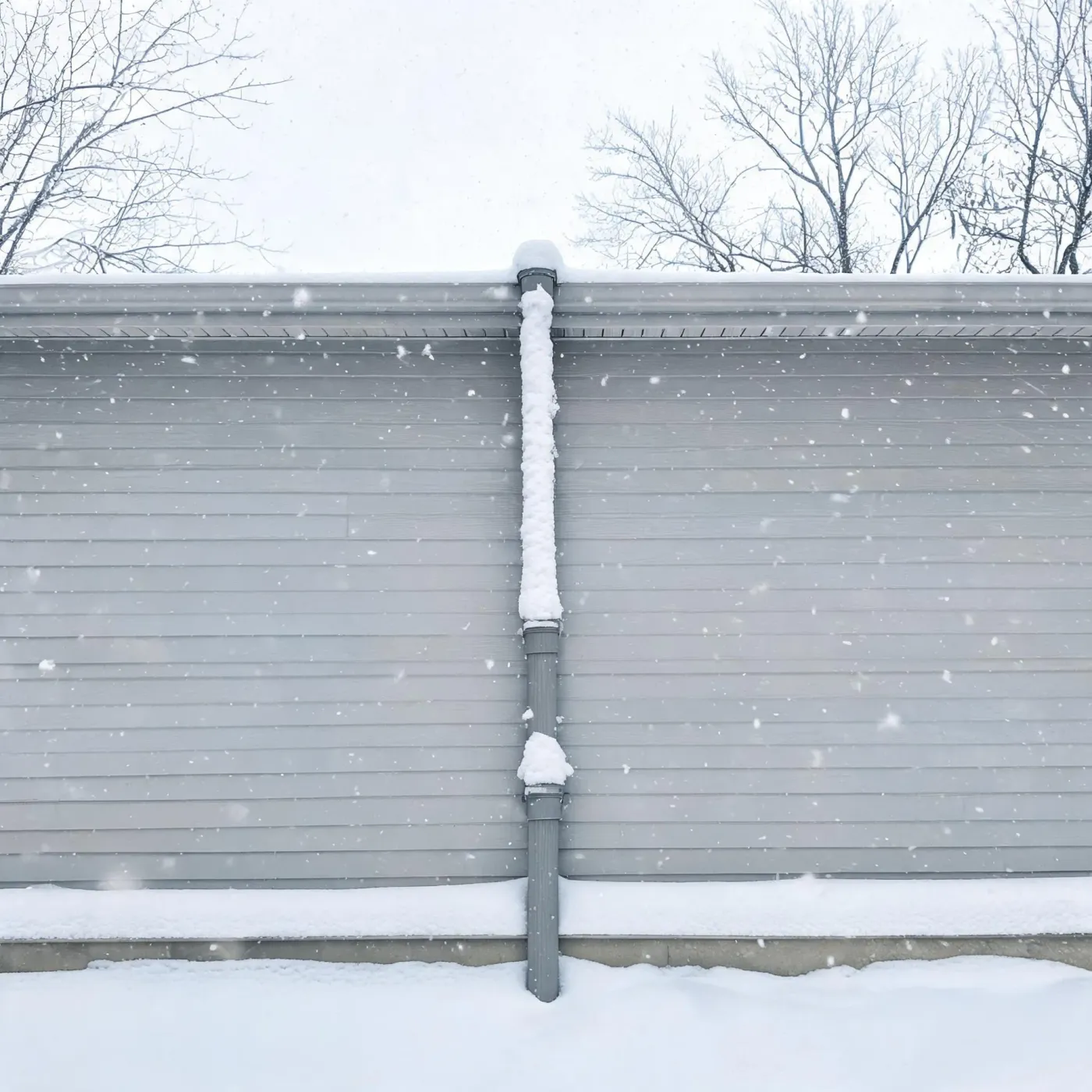
Gray horizontal lap siding on a house exterior with a snow-encrusted downspout running from the gutter to the ground, bare trees behind the roofline, and snow falling.

Winter nights statewide average 28°F, according to NOAA climate data, and that's the stretch where a weak furnace shows its hand. At that temperature your furnace isn't cycling on for twenty minutes and resting. It's running long stretches to hold the house steady, and a tired igniter, a clogged burner, or a blower motor on its way out gets pushed harder than it would on a mild 45-degree day. If you notice the house losing warmth before the furnace kicks back on, or a room that used to hold heat now feels cold by morning, that's the system telling you it can't keep up with what a Delaware night asks of it.

NOAA nClimDiv 1991-2020 county normals weighted by homes

Repair It or Replace It

Repair holds

  • A cracked heat exchanger is the one failure that usually ends in replacement, since a contractor can't patch it safely.
  • A furnace under ten years old with one failed part, like an igniter or a flame sensor, is normally worth fixing.
  • If the blower motor and the heat exchanger are both sound, most other repairs cost far less than a new furnace.
  • A control board or draft inducer can fail on its own while the rest of the furnace still has years left in it.
  • Rust on the burners or the cabinet doesn't mean the furnace is done, but it's worth a contractor checking what's underneath it.

Replacement ahead

  • A furnace that's needed the same repair more than once in a season is telling you the fix isn't holding.
  • Once a furnace is past fifteen or twenty years old, parts for it get harder to find and cost more when they turn up.
  • A furnace that can't keep the house above 65°F on a night in the 20s isn't sized or working the way it should anymore.
  • Soot around the burner door or a yellow flame points to a combustion problem that can outlast more than one repair.
  • A gas bill that's climbed while the thermostat setting hasn't changed usually means the furnace is losing efficiency, not that gas got pricier.
  • If a contractor flags the heat exchanger, that's not a repair to weigh against anything else.
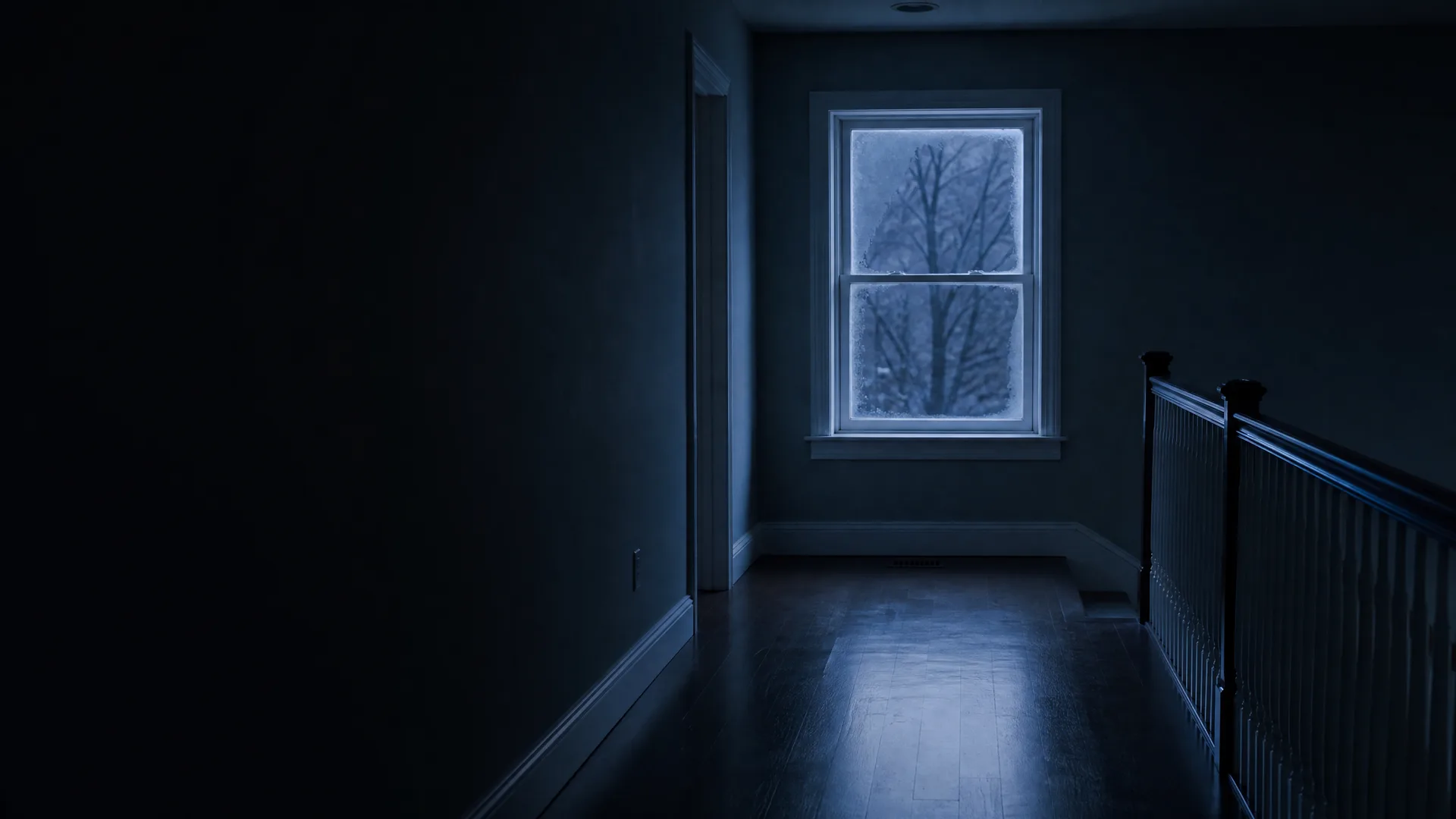
A dark interior hallway with a dark wood floor, a floor vent, a doorway on the left, and a stair railing on the right, lit only by a tall double-hung window showing bare tree branches outside.

It's 2 a.m. and the house is quiet except for the cold. You're up checking on the kids, and the hallway floor is colder than it should be. You stop at the vent. No air moving, no hum from downstairs. Outside the hallway window, frost has crept up from the corners of the glass, and the streetlight outside looks dim and blue through it. You press a hand to the vent cover anyway, just to be sure, and the metal is as cold as the floor around it. Somewhere below, the furnace that was running fine last week has stopped, and it picked tonight to do it.

Winter nights average 28°F statewide

At 28°F, your furnace is running most of the night just to hold the house steady, not cycling off for a rest. A furnace with a failing part gets found out fast at that temperature, because it has nowhere to hide.

NOAA nClimDiv 1991-2020 county normals weighted by homes

A woman stands in the open black front door of a white-sided house with a dark shingled roof while a man in a navy jacket approaches along the walkway, with lantern wall lights, a potted shrub, and flowering garden beds nearby.

So that's what to watch for

A furnace that's short cycling, making a new noise, or struggling to light isn't going to fix itself once the cold settles in for good. Those are the signs, and by the time you've read this far you know what your furnace has been telling you. The question now is just what to do with it.

A local contractor who works on furnaces all winter has seen most of what can go wrong with one, and knows which of these signs means a quick fix and which means something more. When you ask to be matched, it's one contractor who services Delaware homes, reaching out to look at your furnace and your situation specifically, not a handful of companies competing for the call. You'll know where you stand before the next cold snap.

A gray upholstered sofa with a beige cushion and knit blanket beside a curtained window, with a white mug and a book on a dark wooden table in the foreground and a lit lamp in the background.
Sunlight falls across a beige upholstered sofa with a textured woven cushion and a chunky knit throw, beside a dark wood cabinet holding a ceramic vase with green leafy branches, near a white-framed window.
A sunlit corner of a room with a wooden side table holding a ceramic vase of green foliage and a wooden bowl, beside a light upholstered sofa with a knit throw and rust-colored pillow, with window shadows cast on a beige wall.
A sunlit room corner with beige walls, a white-framed window with sheer cream curtain, wood floor with a light rug, and a woven basket holding a knit blanket.
A beige ceramic vase holding a leafy green branch sits on a wooden cabinet in a corner, with sunlight through a sheer curtain casting leaf shadows on the wall.
A grey upholstered sofa with a rust-orange velvet cushion and a textured throw sits beside a window with linen curtains, next to a wooden side table holding a pale ceramic vase of olive branches.

Get your furnace to the right pro

The pro who reaches out is licensed in Delaware.

Get one local pro

No charge to send it. You decide if you hire them.