Wait until morning
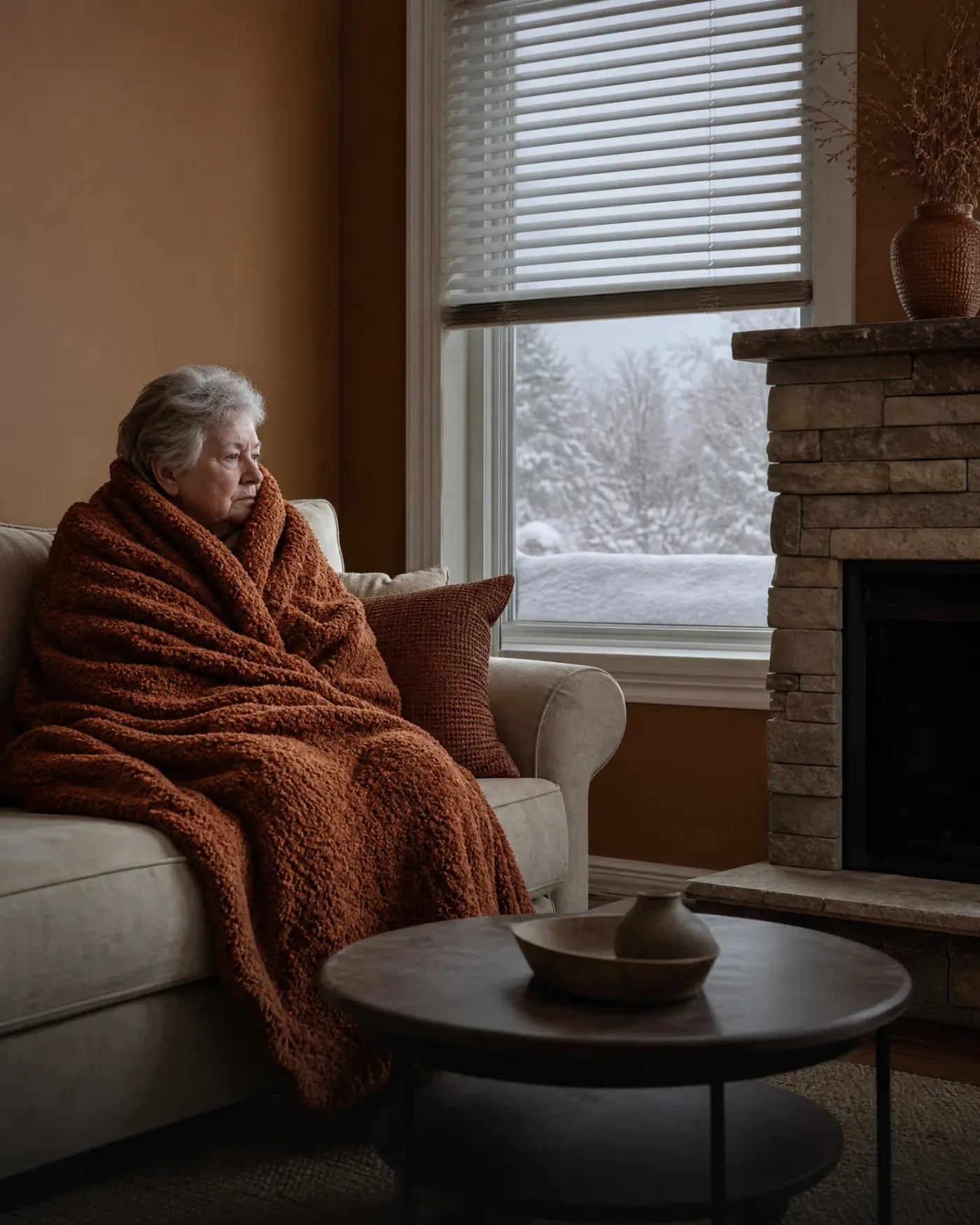
The house keeps losing heat overnight. Pipes along outside walls sit in the cold longer, and a Delaware night can push a room well below comfortable before anyone wakes up.
It's cold tonight and the thermostat is set right, but nothing kicks on. No hum, no click, no blower. In a Delaware winter, with most homes running on gas, a dead furnace at night is more than uncomfortable. You want to know if it's something simple before you decide what to do next.
Gas furnaces are built to stop themselves rather than run unsafe. A clogged filter, a tripped limit switch, or a flame sensor that's gone dirty will all tell the furnace to shut down before it lights. The igniter is another common point of failure. It has a short lifespan and when it's worn out, the furnace won't fire at all, even though the blower might still run. If your thermostat screen is blank or the furnace does nothing at all, check the breaker and any power switch near the unit first. Beyond that, it's a repair, not something to leave until morning when it's this cold outside.


Walk through and check the registers. No air moving, warm or cold. The thermostat screen is lit but the furnace itself is silent, no click from the igniter, no whoosh of the burners catching, no blower kicking in a minute later. Maybe the pilot light is out if your furnace has one. Maybe you smell nothing at all, which on its own doesn't mean it's safe, just that this particular failure isn't a gas leak. Rooms farthest from the furnace are dropping fastest. With temperatures outside in the 20s or 30s, a Delaware house with no heat overnight can lose a lot of warmth by morning, and pipes on an outside wall are the first thing to worry about if this stretches past one night.

Most gas furnaces now use a hot surface igniter instead of a standing pilot. It's a small ceramic strip that glows to light the burners each time the furnace calls for heat. That strip heats and cools every cycle, all winter, and the repeated stress is what cracks it. When it fails, the burners never light, so you get no whoosh and no warmth, even though the blower and thermostat still show power.

Past the igniter sits a flame sensor, a thin metal rod that confirms the burners actually caught. If it doesn't sense flame within a few seconds, the control board shuts the gas valve as a safety measure. A sensor coated with soot can misread a good flame as no flame at all. Either way, the furnace locks out rather than risk gas building up unburned, which is why it goes quiet instead of trying again and again.
Thermostat calls for heat and sends power to the control board.
The inducer motor starts and pulls air through the heat exchanger.
A pressure switch confirms the inducer is running before anything else fires.
The igniter glows hot enough to light the gas at the burners.





Your request goes to one pro, not a list of companies.
After you send the request, you're done searching.
Sending the form costs nothing.


The house keeps losing heat overnight. Pipes along outside walls sit in the cold longer, and a Delaware night can push a room well below comfortable before anyone wakes up.
A furnace technician who works on these systems all winter can usually tell what failed from what you describe and bring the part on the first visit.
Overnight lows here average 28°F through December, January and February. That's below freezing for most of the night, every night, all winter. A furnace that quits in that cold doesn't wait well, and a house with no gas furnace running can drop fast before morning.
NOAA nClimDiv 1991-2020 county normals weighted by homes


No click, no hum, no blower. That's a part that failed, not a system that needs resetting or a thermostat that needs fiddling. Nothing about that changes if you wait for morning. The house keeps losing heat while the furnace sits there quiet, and a Delaware night in the 20s doesn't pause for anyone's schedule.
This isn't a strange problem. A furnace like yours, built the way most gas furnaces are built, fails the same handful of ways, and a local tech who works on these systems all winter has already seen tonight's version of it, probably more than once this season. That's not a guess about your unit specifically. It's what the igniter, the pressure switch and the control board have in common across homes here: when one of them goes, the furnace goes quiet in exactly the way yours just did.
Sending the request tonight gets one licensed contractor on this, local to you, not a batch of companies competing for the job. You're not stuck fielding calls and comparing quotes while the house gets colder. One visit, one person who already knows what this kind of failure usually is before they walk in.
The thermostat is set right. The gas is on. What's missing is the part that turns a call for heat into actual heat, and that part isn't coming back on by itself tonight.





Only one pro gets your request, so you hear from one company.
It costs nothing to send, and you don't have to hire anyone.